





The US Supreme Court has quietly stoked chaos…
Unelected for life, lightly supervised on ethics, and central to midterms and presidential immunity: the Court is shaping how American democracy works, or fails, more than most voters realize.
Artists (painters, playwrights, film and TV show creators and directors, etc.) quietly synthesize important social, technological and political trends before they become obvious to the general public.
Paying attention to artists and their work provides an important foundation for understanding today’s world through a unique lens

Unelected for life, lightly supervised on ethics, and central to midterms and presidential immunity: the Court is shaping how American democracy works, or fails, more than most voters realize.

As “communist” becomes the go-to insult for political opponents, the tactic looks less like debate and more like a Roy Cohn playbook: define the enemy, repeat the label, and make complexity disappear.

When Gemini dismissed questions about concentrated media ownership as an “antisemitic trope,” the exchange exposed how AI can defend preferred narratives instead of testing facts, and why independent democratic education still matters.

Considered as a classic of 20th-century literature, Joseph Heller’s 1961 novel Catch-22 comedically told the story of a WWII bombardier named Yossarian who desperately wanted to be declared insane so he could stop flying increasingly suicidal missions. The problem was “Catch-22.”

America is so deeply politically divided at its 250th birthday that it needs two separate and distinct celebrations on its opposite coasts on July 4th to celebrate this seminal holiday. But political schism does not disqualify what remains as a noteworthy achievement in longevity for this still young political experiment.

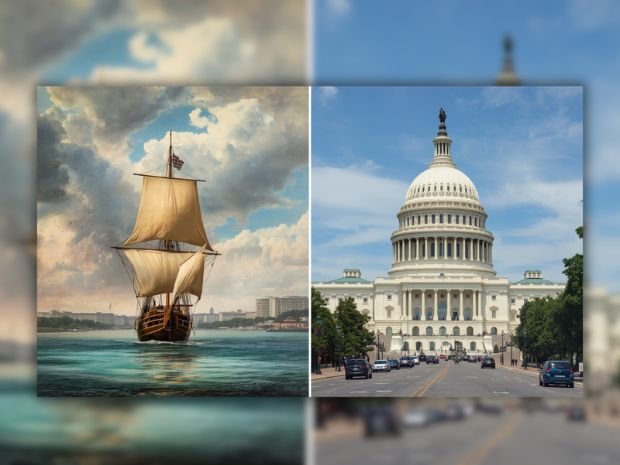
In 1831, a twenty-five year old French magistrate named Alexis de Tocqueville boarded a ship bound for America. He went, officially, to study the American prison system. But what he was really looking for was something far more personal and far more urgent as he was seeking answers and hope.

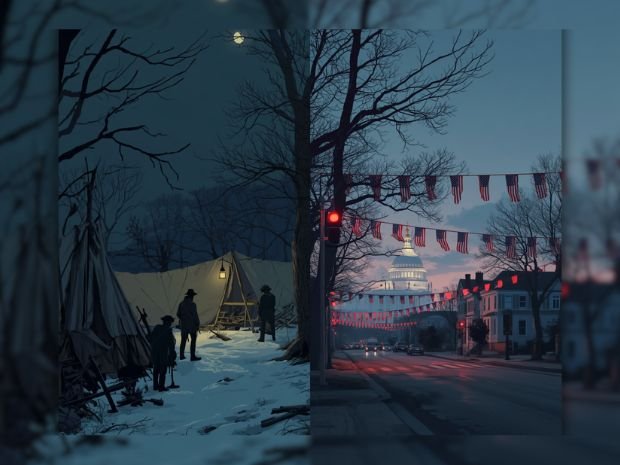
As America turns 250, patriotism has been diluted into loyalty tests and lawn-chair symbolism. Two and a half centuries ago it meant risking everything, for self-government, not for a slogan.

The easy parallel between the 1920s and our 2020s is economic and technological. The more important connection runs deeper and into the human conditions of fear, identity, and the habit of reaching for a scapegoat when the world changes too fast.

Being born in the early 1960's, my first memories of "news that mattered" came from Walter Cronkite who was the anchorman for the CBS Evening News during an epic run that lasted from 1962 to 1981, which was also was an extraordinarily volatile period in US and world history.
