
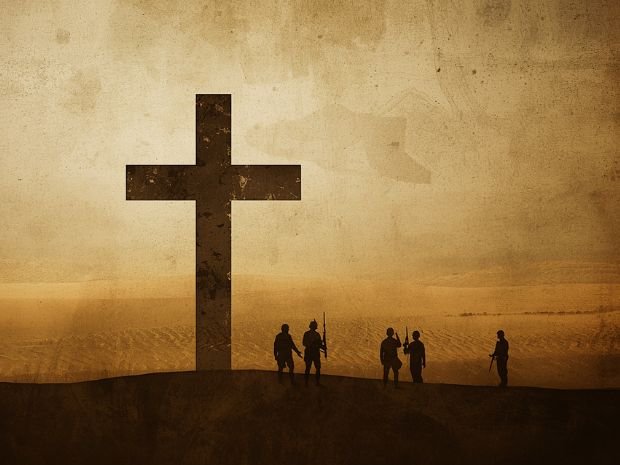
From Google Gemini’s perspective it is important to know where one comes from because understanding one’s own origins, acts as a rearview mirror that provides clarity for one’s future path. Through this lens and with American troops on their way to Iran (the war isn’t over…heed what this administration does and not what it says…), it becomes important to know about the man who is sending our soldiers to war. Where does Secretary of Defense (War, I mean…), Pete Hegseth come from ?
Wikipedia does a great job in covering this question. There one can see that Hegseth has an interesting background. In addition to being the valedictorian of his high school class, Hegseth became a political activist during his time at Princeton where he was the publisher of its conservative student newspaper, The Princeton Tory. He served his country as an infantry officer in the Minnesota Army National and was deployed to Iraq, where he received a Bronze Star Medal. Hegseth also went on to become a TV personality on Fox News. In digging deeper, however, it isn’t all good news for Hegseth. Allegations of sexual misconduct as well as financial and other mismanagement of two Veterans groups he has managed is also part of his background.
For anyone not thinking of reading further, please note that this perfunctory and abbreviated Hegseth fact check provided above is not the point of today’s column. The implications laid out in Hegseth’s 2020 best-selling book, “American Crusade”, however, are. And here is where the inspiration for this week’s note comes from as when the writer asked Google Gemini if Hegseth talks about “holy war” in “American Crusade” ?, the following answer was provided:
“Yes, in his book, “American Crusade”, Hegseth directly discusses and advocates for a conceptual “crusade” or “holy war” mindset, framing it as a modern struggle to defend Western civilization against Islamism. “
Hegseth didn’t stop with Islam as an enemy to the cause of a faith based conservative way of government. In step with President Trump’s post on Truth Social last week;
“Now with the death of Iran, the greatest enemy America has is the Radical Left, Highly Incompetent, Democratic Party…”, (he’s deadly serious…)
Hegseth also declared in his book the need for a crusade to combat “internal” enemies as well.
While the second iteration of Hegseth’s “holy war” backed by Trump against Democrats is highly disturbing (and likely a topic for future notes…), it is Hegseth’s particular “crusade” against Islam that is the focus of today’s discussion which has the following progression:
- An alarming rise in faith-based government (Israel and the US) heightens the probability for unexpected, irrational and destructive actions and outcomes as narratives become more important than truth,
- The Fourth Crusade (there were nine total crusades that spanned 1096AD to 1291AD) offers a harsh lesson for where a “faith based” initiative can go horrifically wrong,
- What the first two topics above portend for the current conflict in Iran and what this means for markets.
An Alarming Rise in “Faith-Based” Government
Google Gemini offered the following take on the recent trends of religious extremism in Israel.
“Religious extremism in Israel, primarily manifesting as far-right Jewish nationalism and ultra-Orthodox fundamentalism, has seen a significant rise, particularly after the Oct. 7, 2023, attack and withthe ascendance of the most right-wing government in the country’s history. This trend is characterized by increased violence against Palestinians, harassment of Christian communities, and the push for policies such as the expansion of West Bank settlements and the assertion of Jewish control over the Temple Mount…”
Religious fanaticism has also come to the US government and the US military. While this is controversial terrain, sources supporting this premise are provided below with one of the posts coming from Adam Kinzinger (second attachment), a former Republican (more akin to a “Reagan” era Republican) congressman and veteran of the US Air Force and Air National Guard.
Watch: faith and the US military (YouTube)
Adam Kinzinger: When Armageddon Enters
Amis these troubling developments is Republican Congressman Lindsey Graham who helps make a troubling connection between the two concerning observations referenced above.
The Arab Weekly: Lindsey Graham Got His War
Instagram reel: Lindsey Graham
The point in first identifying and then connecting these troubling dots is that against such a backdrop an environment exists where logical and mission advancing operations (for a well-articulated military end game, which is lacking in Iran…) get lost within the narrative of a “holy war”. An example of such a mission could be sending US Marines to seize Iran’s oil exporting base, Kharg Island, even though Iranian defensive capabilities have proven to be far better than anything expected by the US and Israel when they charged into this war. In such a scenario, military leaders could be apt to emphasize to their troops that not only are they fighting for their country, but also for the Almighty Himself.
The Fourth Crusade: A Harsh Lesson
When Pope Innocent III saw that Jerusalem had been taken back by Islamic forces (Ridley Scott’s 2005 film “Kingdom of Heaven” was loosely based on this history…) after the holy city had been “liberated” during the First Crusade in 1099AD, he called for action to reclaim the holy city.
To this end, “Innocent III began preaching what became the Fourth Crusade in 1200 in France, England, and Germany, but primarily in France. The Fourth Crusade (1202–1204) was a Western European armed expedition originally intended to conquer Muslim-controlled Jerusalem by means of an invasion through Egypt.
Instead, a sequence of events culminated in the Crusaders sacking the city of Constantinople, the capital of the Christian-controlled Byzantine Empire. The Fourth Crusade never came to within 1,000 miles of its objective of Jerusalem, instead conquering Byzantium twice before being routed by the Bulgars at Adrianople.”
Lumen Learning: The Fourth Crusade
Now let me rephrase what reads like innocuous history above. The Pope of the time wanted Jerusalem back. He had economic incentive to do so. He went to western Europe with an offer to take their most blood thirsty knights and soldiers to go to the holy land to liberate Jerusalem. In return, the Pope promised eternal life and absolution for any atrocities committed and plunder taken along the way as long as the “Crusaders” set Jerusalem free.
As described above, the geopolitics of that time diverted this Christian Roman Catholic invading force to sack (besides the city succumbing to new leadership, this also means that the city’s populace, including women and children were slaughtered…) the Christian Eastern Orthodox city of Constantinople which they did. This means that in the name of “faith” Christians killed Christians while their military objective never came close to being met. Most history books will tell you that Constantinople (modern day Istanbul) fell in 1453AD to overwhelming Islamic force. While partially true, a deeper dive reveals that Constantinople fell in 1204 to a Roman Catholic army of blood thirsty crusaders in the name of “faith”.
And yes, for anyone rolling their eyes (and thank you for reading so far…), this was over eight centuries ago, but now consider two things:
- Secretary of Defense, Pete Hegseth sports a prominent tattoo of the Jerusalem Cross (a symbol of the crusades) emblazoned across his chest which is complemented with a “Deus Vult” (Latin for “God wills it !”) tattoo on his arm.
- Pete Hegseth’s best-selling book’s title, “American Crusade” is more than provocative. It also means that Mr. Hegseth is likely to be a “true believer” and in that world “faith” and brutality trump (pun intended…) enlightened reality.
What This Portends for Iran — and for Markets
So far, even though the war in Iran is not going well (more on this below…), the Trump administration has been holding together an incoherent “duct tape” narrative on the conflict which has held markets together remarkably well (when considering what is revealed below) for now. Yes, while some cracks are forming, the VIX remains at 26 points (heightened volatility but not disorderly), the US Dollar has firmed, credit spreads remain low and the S&P 500 is only down 3.5% YTD through March 24th as of 3:00 PM.
And while everything said above may be consistent with the narrative told so far by Trump and his crusading Secretary of Defense, the news outside the US calls into question the recent benign behavior of markets when you consider:
- The US military has withdrawn across much of the Mid East because of Iranian drone and missile fire. Consider the work of Captain Roy Harkness below. And worthy of note in Mr. Harkness’s work is the fact that the blockage of the Strait of Hormuz to any shipping other than oil going to India and China is just an “Iranian thing”. It’s also a “Lloyds of London thing” as they will not insure any ships going through the Strait. And while this may seem like a quick fix. It isn’t which means that an energy shock coming to the US isn’t a matter of speculation. It is now a reality.
- Amid many setbacks for the US and Israel, Iranian missiles have also hit Israel’s only oil refinery at Haifa. The implications of this hit have dire implications for Israel which raise the stakes in this conflict to an alarming level. Again, please see the work of Captain Roy Harkness.
Captain Roy Harkness: The Voice of Saruman
Captain Roy Harkness: The Bright Sun Brings It to Light
It is against this backdrop of a war that is going far worse for the US and Israel than is being reported by the US and now a controlled domestic media that is sympathetic to Israel, that “game theory” portends some type of drastic action. The fact that such action is likely to be supported with religious, crusading fervor and justification, again (I have been worried about US troops since this war started. It isn’t anything against the US military. It is just a horribly bad set up…) has this writer worried about US soldiers some of whom may be conducting in the very near future what appears as a suicide mission to seize Iran’s Kargh Island which serves as a seaport for the transport of 90% of the country’s oil products.
One final point on the Iranian War is the writer does not believe that the US and Iran are talking. Iran is fighting a war of attrition and now hold more power over the Strait of Hormuz than conventional wisdom has realized. From Iran’s perspective, they will end the war only with the US leaving the Mid East while also using the Strait of Hormuz as their own private toll road. Additionally, the viability the state of Israel is called into question. Does this sound like a stance that represents anything close to something that can be negotiated from a US and Israel perspective ? There’s obviously no need to answer this question…and while I just saw that Trump extended some kind of deadline for Iran, the writer believes that Iran is scratching their head in bewilderment relative to what has been described above. It is likely more likely by the day that Iran may be determining how this war ends and not Donald Trump.
Markets Look Too Sanguine
To this end, the writer is:
- Adding to gold which has fallen considerably back from a high of 5,345 an ounce to now $4,400 an ounce in conjunction with higher US rates and a Fed who is now unlikely to be cutting rates at all this year. Rate differentials are the first part of gold’s recent story which has driven the price down recently. The next chapter for gold, however, will be focused on the sustainability of US debt which is poised to eclipse $40 trillion as this note is being written. Meanwhile, such a setback for the US in the Middle East accelerates questions around the sustainability of the US Dollar as the world’s reserve currency.
- Maintaining shorts on the market via SPXS and SOXS.
- Maintaining some exposure to China as China appears poised to be a beneficiary of the Iranian conflict.
- Maintaining energy investments in XLE while swapping out of RIG into an energy infrastructure play in the form of VG.
- Maintaining over 50% cash.
- And bracing myself for next November because if the war is going even half as bad as described above, next year’s mid-term elections represent a battleground for the future of democracy in the US.
Final Note: Bloomberg’s quote of the day speaks volumes and goes “It is dangerous to be right in matters on which established authorities are wrong.” This writer would love to be wrong ! And have a great week !